Huda Al-Hassan is Head of the Research Department at the Education Directorate in Aleppo.
In recognition of Women’s History Month, we spoke with her about how education plays a vital role in building rights, representation and opportunity for women and girls in Syria.
Interviewer: Why do we need women and girls to build an effective education system in Syria?
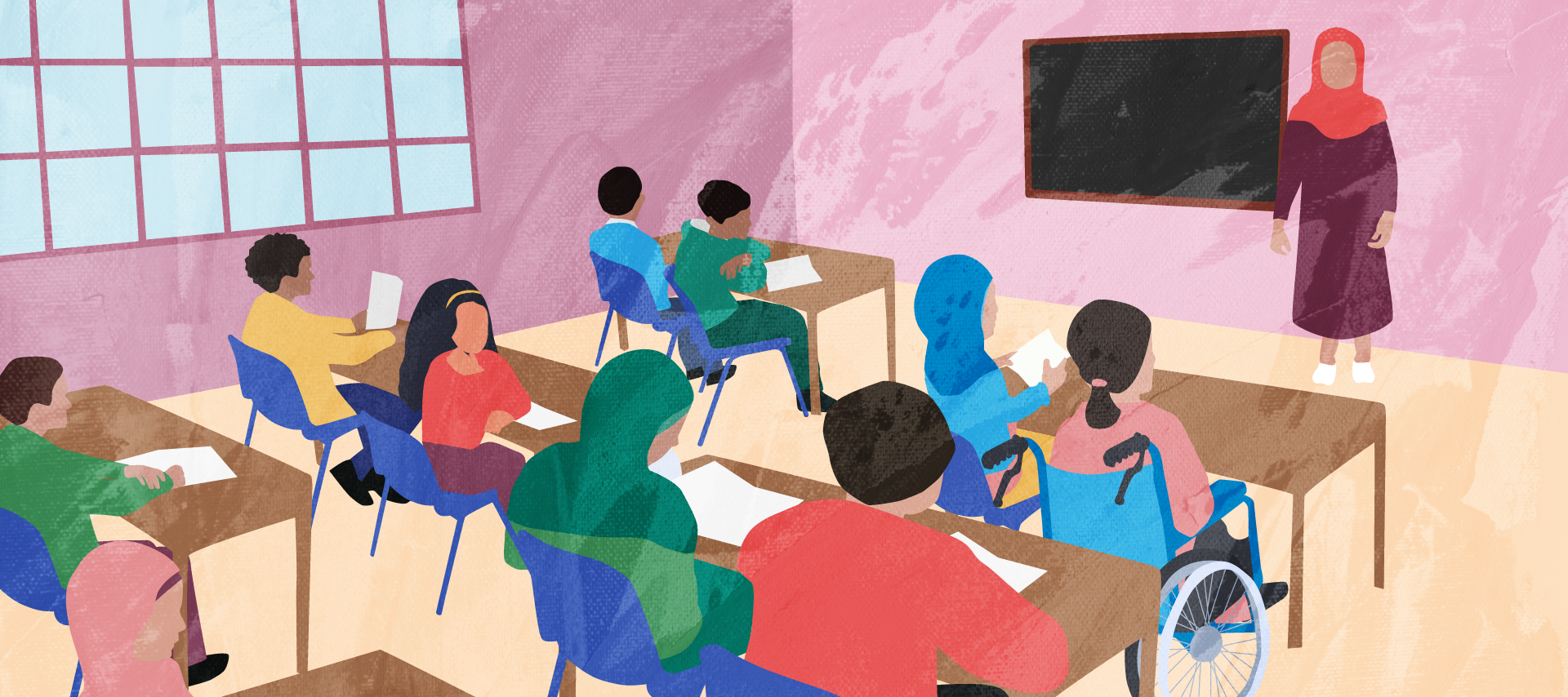
Huda: We need the participation of women and girls because they represent a fundamental part of society. No education system can be truly effective or equitable if it does not consider the needs of half of its population.
The presence of women and girls in education – whether as students, teachers or leaders – helps ensure that the challenges facing girls in schools are properly understood and addressed. Their inclusion contributes to creating a more inclusive and equitable learning environment and reinforces gender equality which ultimately benefits society as a whole.
What is important about education policies that support the rights of women and girls? Can you give an example?
Education policies that support the rights of women and girls are essential to ensuring equal and safe access to learning opportunities. Such policies help remove barriers that may prevent girls from enrolling in or continuing education, including discrimination or lack of safe learning environments.
For example, policies may include ensuring appropriate sanitation facilities for girls in schools or promoting the recruitment of female teachers particularly in areas where families are more comfortable sending their daughters to schools with female staff. These measures can significantly improve girls’ enrolment and retention rates.
What happens in education if we ignore the experiences, rights, and needs of women and girls?
Ignoring the needs and experiences of women and girls can lead to several negative outcomes. Girls’ dropout rates may increase and inequality in access to education may persist. Schools may become less safe or less responsive to the specific needs of female students.
Ultimately society loses the opportunity to benefit from the talents and contributions of a large segment of its population. This negatively affects both the quality of education and broader community development.
When we include women and girls in education, what changes?
Including women and girls in education leads to significant positive change. Girls are more likely to enroll, remain in school and succeed academically. The learning environment becomes more balanced and inclusive and positive female role models emerge in teaching and leadership positions. In addition, inclusion helps challenge harmful gender stereotypes and promotes a culture of equality and mutual respect within schools and communities.
What is Manahel doing to support schools to improve women’s and girls’ inclusion?
Manahel supports schools in several ways to strengthen the inclusion of women and girls. This includes promoting female representation in schools by encouraging the recruitment of female teachers and women in leadership roles.
The programme also provides training on inclusive pedagogy to ensure teaching approaches are responsive to the diverse needs of girls and boys and encourage equal participation. Additionally, Manahel supports schools in implementing safeguarding measures to ensure safe, violence-free learning environments. Lastly the programme engages communities and parents to raise awareness about the importance of girls’ education and their role in building a stronger future for society.
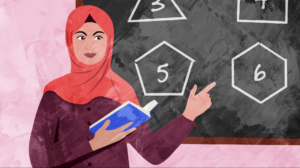
The UK-backed Syria Education Programme, locally known as Manahel, has been providing vital education through schools, protection, and psychosocial support since 2018.